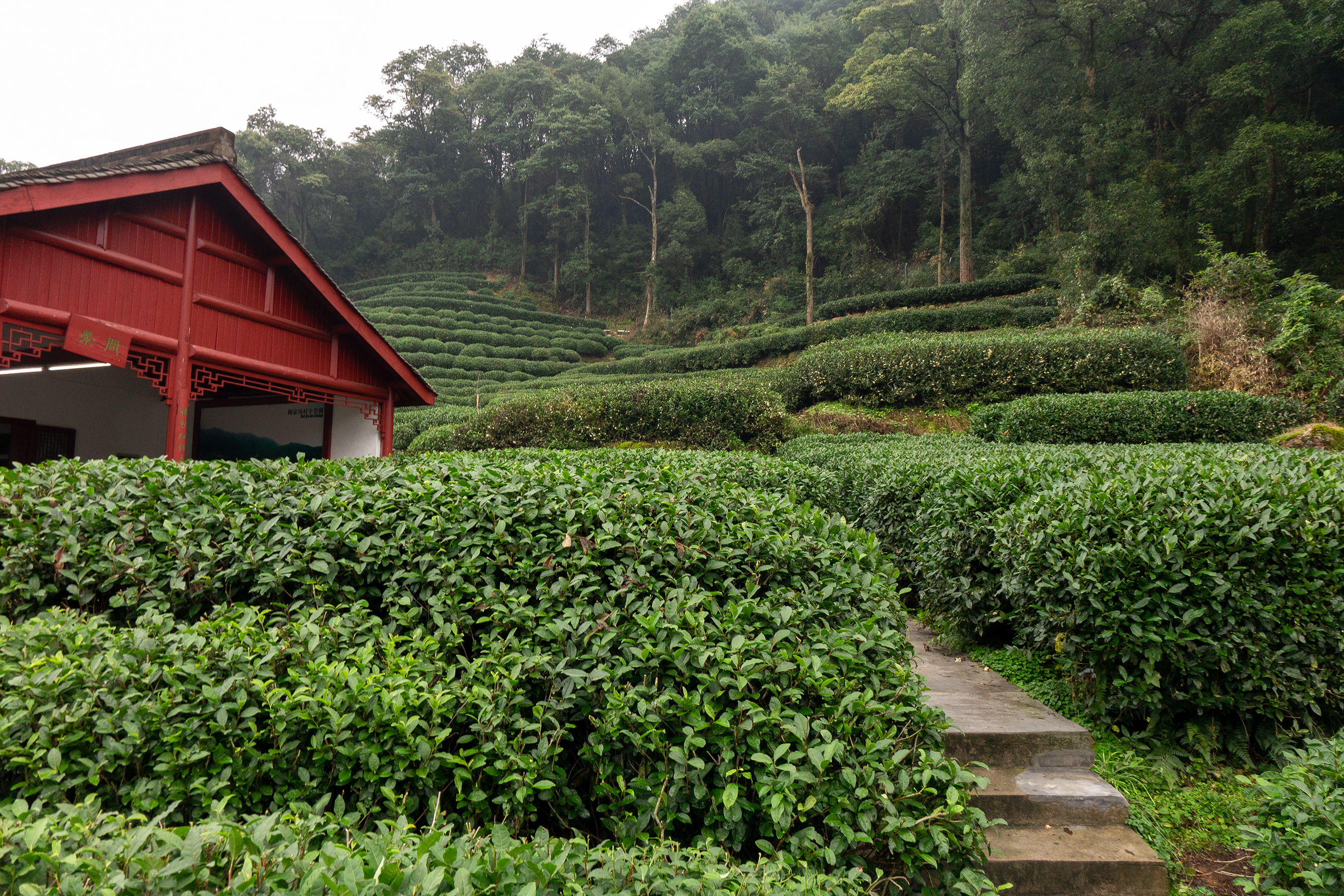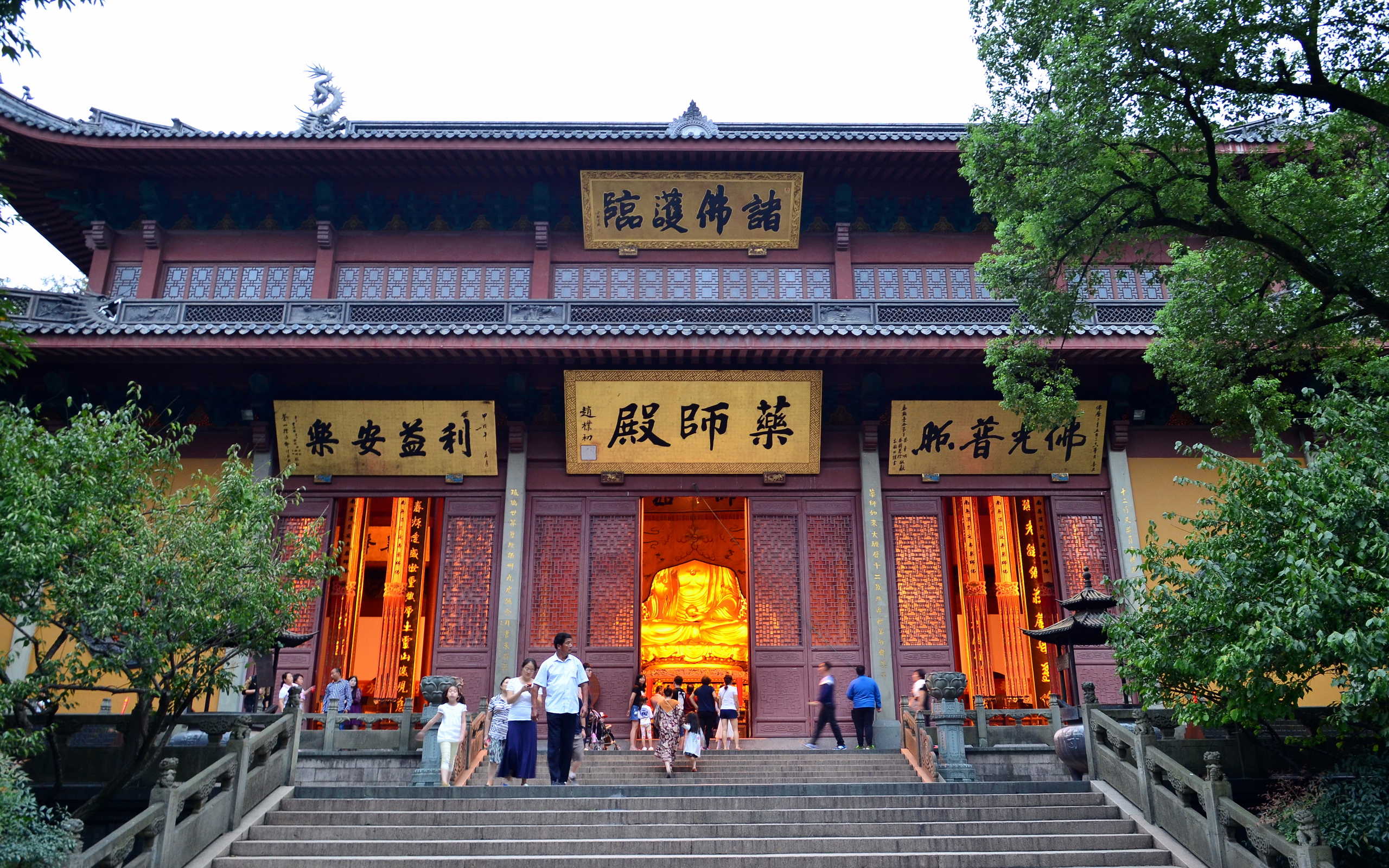
Roof line and courtyard of Lingyin Temple in the wooded hills northwest of West Lake

Lingyin Temple

A Chan Buddhist temple founded in 328 AD, entered through a gorge of carved grottoes in the hills northwest of West Lake.

Practical Information

A Chan Buddhist temple founded in 328 AD, entered through a gorge of carved grottoes in the hills northwest of West Lake.

Admission The temple sits inside the ticketed Lingyin–Feilai Feng Scenic Area. Check the current price and opening hours before you go.

Time needed Half a day, including the walk in from the road.

Best time Early morning on a weekday, outside public holidays.

Location In the Wulin Mountains northwest of West Lake.

Background

Lingyin is the second half of a Hangzhou trip that would otherwise be all water. It sits in the wooded hills northwest of West Lake, and the walk in is as good as the destination: you pass a cliff face full of Buddhist carvings before you reach the temple gate.

Lingyin means Temple of the Soul's Retreat. According to tradition it was founded in 328 AD during the Eastern Jin dynasty by an Indian monk named Huili, which makes it one of the oldest Buddhist sites in the region. At its peak under the Wuyue Kingdom, between 907 and 978, the complex held 18 pavilions, 72 halls, and more than 1,300 dormitory rooms for a community of over 3,000 monks. During the Southern Song it was counted among the ten most important Chan temples in Jiangnan.

The temple has been damaged and rebuilt more than once. During the Cultural Revolution it was ransacked, and its planned destruction in 1966 was stopped by local people and students from Zhejiang University. It is a working temple today, not a museum, and the Lingyin–Feilai Feng Scenic Area around it charges admission.

Visit Strategy

Give Lingyin half a day. It is not a quick look at a hall and a statue: the compound has several courtyards and halls climbing the hillside, and the Feilai Feng grottoes sit on the approach road, so the visit is longer than it looks on a map.

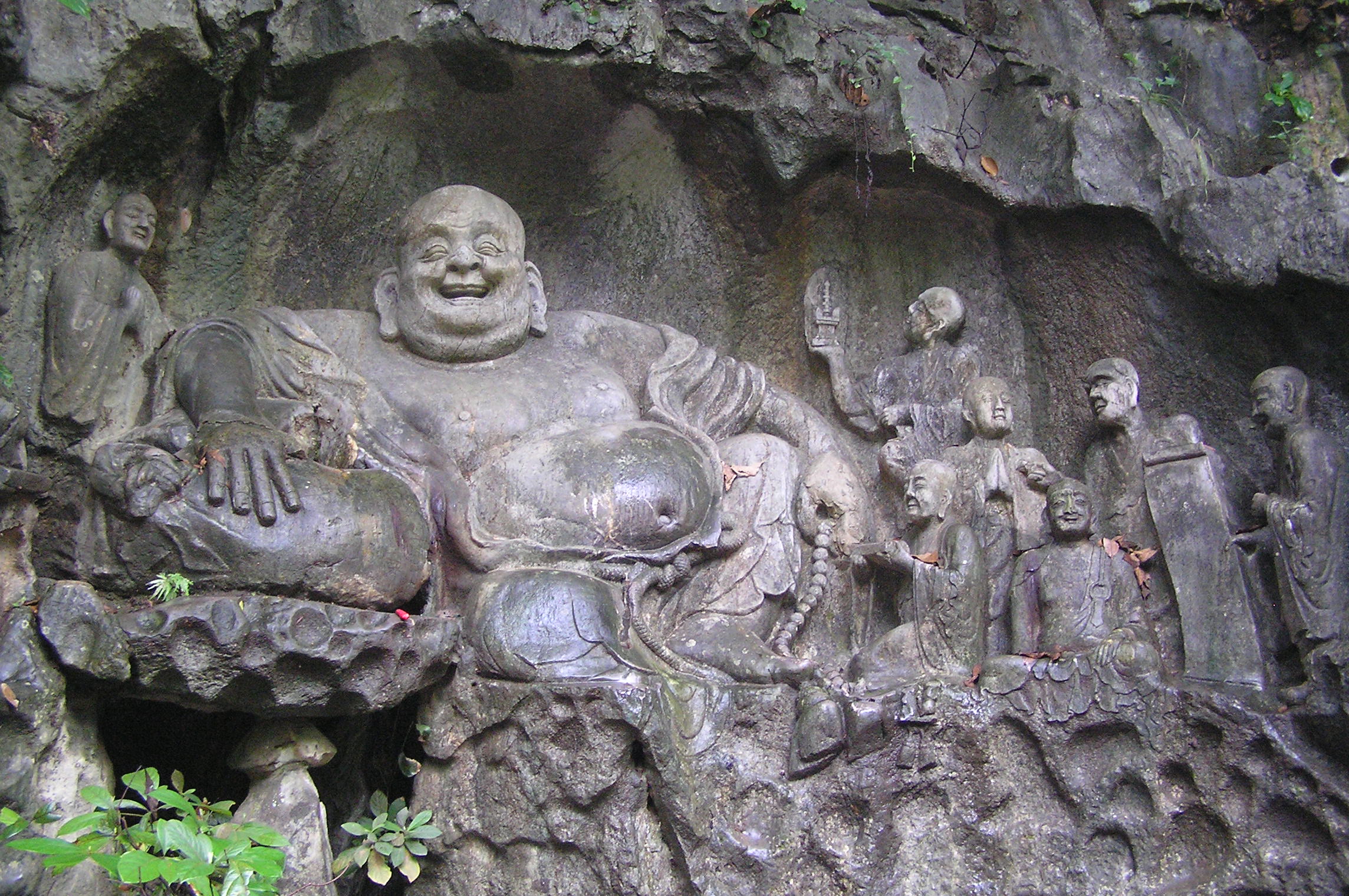
The carvings at Feilai Feng come first, on the left of the path as you walk in from the entrance. Many of them date from the same Wuyue period that built the temple's grandest version, and most visitors walk past them in a hurry to reach the temple gate.

Two things are worth arranging around. First, arrive early: this is one of the busiest sights in Hangzhou and tour groups arrive by mid-morning. Second, keep the day to one hill branch. Lingyin pairs well with West Lake, and it pairs badly with a rushed attempt to add the tea hills as well.
Highlights

The Feilai Feng Carvings

The rock carvings line the approach road on the left before the temple gate. Many date from the Wuyue Kingdom, the same period that built the temple's grandest version.

The Temple Courtyards

The working temple is the second half of the visit: halls and courtyards in the wooded hills, still busy with worshippers rather than only visitors.

Transport Access

Method Line / Stop Notes
Taxi or ride-hailing The simplest option from the lake's north shore and the most reliable when the roads are busy.
Bus Several routes run between the lake area and the temple entrance; your mapping app will pick the useful one on the day.
On foot Reachable from the north shore of the lake, but it is an uphill walk of well over an hour, which is a poor use of a short trip.
Metro The metro does not put you at the gate; pair a metro ride with a short bus or taxi hop.

Traveler Tips

Dress for an active temple

covered shoulders, quiet voices in the halls, and no flash photography where it is posted.

Feed the carvings some time

the Feilai Feng grottoes are the part of Lingyin that rewards slowing down.

Carry water and expect steps; the compound climbs into the hillside.

Skip the tea shops right at the exit and buy tea where you can sit and taste it, in the villages or in town.

Check the calendar before a weekend visit; this is a pilgrimage site as well as a tourist stop.

Nearby Sights